
A bit of a book review, as well as some information on our upcoming move to Canada (see Price of Freedom).
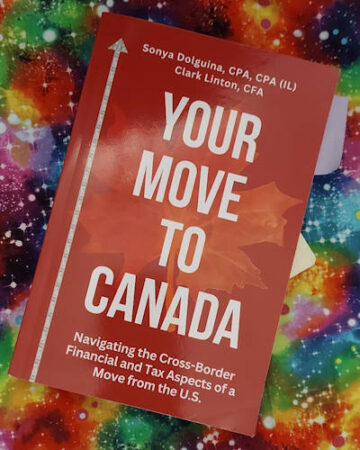 Your Move to Canada: Navigating the Cross-Border Financial and Tax Aspects of a Move from the U.S.
by Dolguina & Linton
Neither my husband nor I have been forced to deal with excessive financial resources, yet our moving to Canada brings up a number of potential tax complications.
I am a dual citizen, while Hubby is a US citizen, and soon to be legal Permanent Resident of the great north. Since we both hold US citizenship, the American government demands we report and pay tax on our world-wide income.
There are tax treaties with a number of countries, including Canada, to reduce double taxation. But there are plenty of differences in each country’s tax code that can trip us up if we don’t do our research.
And the book shown here is a valuable resource. Both authors are well-versed in the issues and regularly work with folks moving north. A quick note; I am in the process of cutting all ties with Amzn (see Reducing My Amzn Footprint for more) so these links are to Bookshop.org – which might cost you a few cents more, but without that whole ‘destroying indie bookstores thang‘.
As a Canadian citizen, that government hasn’t required I file a return while living and earning in the US, but once I return that will change. We’ll have to report world-wide income to the CRA (Canadian Revenue Agency). While tax treaties will help, it is still a complex procedure:
# As a legally-married couple we file a Joint US Tax Return, which is a form of income-splitting that the Canadian tax code does not recognize. We will each be filing separate Canadian tax returns once we move;
# The bulk of my income is from government pensions on both sides of the border (as my work history is bi-national);
# I do some freelance work through an LLC [a business structure not recognized in Canada] with its own potential issues;
# Hubby’s current retirement plan is a company-sponsored 401[k], which each country treats differently- especially as regards deposits made after moving;
# While there are a number of ways he can transfer that plan after he retires from his current employer, all options have current and future tax implications.
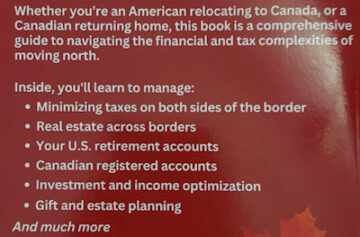 We are ‘blessed’ (as noted above) to not have other investments, real estate (personal or business) on either side of the border, or fancier tools like Health Savings or Education Saving plans. And no children to add complexity.
Good news for people who do have any (or all) of those considerations- this book covers them in detail. Over 400 pages of insight as to what to keep as US-based and what to make Canada-based assets. The book’s available in multiple formats; shown here is my paperback copy. I don’t mind an e-book for fiction, but really prefer a physical copy to tag and notate.
FTC Statement:
As an Affiliate, I will earn a small commission, at no additional cost to you, should you make a purchase following any of the links in this post. My comments on the value of this item are based on my personal experience.


